
Food and drink brands have a problem most sectors do not. Your demand arrives in spikes, your products have a shelf life, and your customers search by occasion, diet and dietary restriction rather than by product name.
Someone looking for a birthday gift does not search for your brand. They search for gluten free brownies delivered next day, and whoever answers that question gets the order.
We work with artisan food, drink and gifting brands on exactly that problem. Being the answer at the moment somebody is deciding what to send, what to serve or what to buy.
What makes food and drink different
Your year is not flat
Christmas, Valentine’s Day, Mother’s Day, Easter and summer entertaining account for a disproportionate share of the year’s revenue for most gifting and treat brands. The content that ranks for those peaks has to be live and indexed months before the peak arrives, not published in the week it starts.
We plan content backwards from your peaks rather than publishing on a flat monthly schedule.
Diet is a search category, not a product attribute
Gluten free. Vegan. Dairy free. Lower sugar. Lower calorie. Nut free.
In food and drink these are not filters on a product page. They are the search term, they carry serious volume, and they bring buyers with very specific needs and very little tolerance for ambiguity. A brand that answers them clearly wins customers who will not shop anywhere else once they trust you.
Most food websites bury this information in a product description. It should be a page.
Occasion beats product
Birthday, corporate gift, thank you, new baby, anniversary, housewarming, team treat. Buyers search the reason before they search the thing, and each reason is a different page with a different message.
Perishable products change your geography
Next day delivery, chilled shipping and cut-off times are commercial constraints and ranking factors at the same time. If you can only deliver within certain regions, or your cut-off is 2pm, that belongs on the page and in your structured data rather than being discovered at checkout.
How we work with food and drink brands
We build around a hub and spoke structure. One authoritative page owns each thing you sell or each occasion you serve. Supporting pages underneath answer the specific questions buyers ask, and every one links back to the hub.
That is why a food brand can publish for two years and move nothing, while a connected set of eight pages moves a whole category. The structure, not the volume, is what makes content compound.
Three services sit underneath this, and most brands need at least two.
SEO for food and beverage brands
Traditional search. Product and category structures built for how people actually search, occasion and dietary landing pages, Product schema with real prices and availability, and the technical work that gets a large catalogue indexed properly.
AEO for food and beverage brands
Answer engine optimisation. Being the source that gets cited when someone asks an AI assistant for the best vegan brownies delivered in the UK or whether a product is safe for a coeliac. That means clear questions, direct answers, and facts stated plainly enough to be quoted.
GEO for food and beverage brands
Generative engine optimisation. Being the brand a model names from its own knowledge rather than from a cited page. This is built through consistent entity information, third party coverage and the kind of mentions that train a model to associate your name with your category.
Food and drink brands we work with
Slimline Wine
A lower calorie, lower sugar wine brand selling direct to consumers.
We run ongoing SEO and content work on slimlinewine.com. That has included a full meta audit across every published page, live implementation of the fixes, an internal linking programme connecting blog content to product pages, and ongoing blog publishing against the search terms their buyers actually use.
Work is implemented directly rather than handed over as a list of recommendations somebody else has to action.
Rachael’s Kitchen
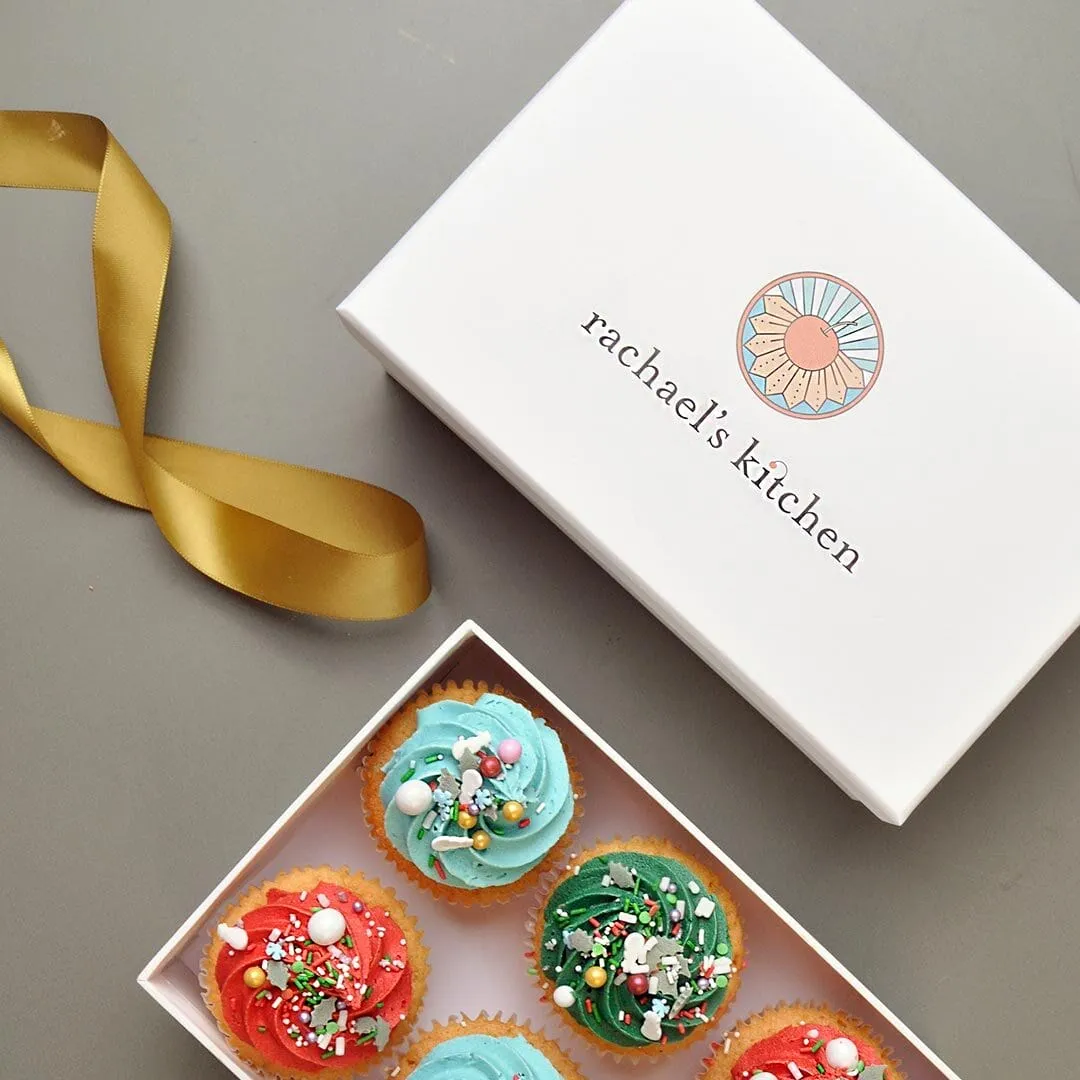
Premium artisan cupcakes, handmade and delivered next day across the UK, with gluten free and vegan options throughout the range.
The commercial challenge here is that the demand is split three ways: corporate gifting, family celebration and self-purchase, each searching differently. We built the strategy around occasion and dietary landing pages rather than product pages alone, so that corporate cupcake delivery, gluten free cupcakes delivered and birthday cupcakes each have a page built to answer them.
Dietary inclusivity is a genuine differentiator in this category and it had been treated as a product feature rather than a search opportunity.
Bear’s Brownies
Handmade brownie gifting, built on a strong brand and genuinely good photography.
We have been rebuilding the homepage around the way people actually buy gifts, using their existing brand guidelines and photography library. For a gifting brand the homepage is doing a conversion job rather than a brochure job, and the two need very different structures.
Who we work with
Artisan food producers. Drinks brands. Gifting and hamper companies. Bakeries and patisserie. Speciality retailers. Direct to consumer food brands.
We are based in Peterborough and work with food and drink brands across the UK.
The Food and Drink Visibility Audit
Most food and drink brands can tell you how they rank on Google. Almost none can tell you what an AI assistant says when somebody asks for the best vegan brownies delivered in the UK, or whether their products appear at all when a buyer asks for gluten free corporate gifts.
Those are now separate questions with separate answers, and your reporting almost certainly only covers the first one.
We check all three, free.
What’s included
What we look at
Traditional search. Where you rank for your commercial and dietary terms, whether your product pages carry correct schema with real prices and availability, and whether your own pages are competing against each other.
Answer engines. What Google’s AI overviews, ChatGPT and Perplexity actually say when asked the questions your buyers ask before ordering, and whether you are cited, ignored, or described inaccurately.
Generative visibility. Which brands a model names unprompted in your category, and whether yours is one of them.
Seasonal readiness. Whether the content that needs to rank for your next peak is live and indexed yet, or still on a list.
What you get back
A one page summary within five working days. Every finding labelled as verified live, reasoned inference, or requires connected data, so you can see what we have proved and what we have not. No deck and no pitch.
What we need from you
Your website address. Read access to Google Analytics and Search Console if you have them, which makes the audit considerably more useful, but it is not a condition.
Frequently asked questions
Do you work with small food brands or only established ones?
Both. The work changes rather than the approach. A newer brand usually needs structure and a handful of pages that can actually rank. An established brand usually has plenty of content working alone rather than compounding.
When should we start work for Christmas?
Content needs to be live and indexed by late summer to compete for Christmas gifting terms. Paid media can start in October. If you are reading this in November for this Christmas, the honest answer is paid social and email rather than search.
Can you help with allergen and dietary pages?
Yes, and it is usually the fastest commercial win in food and drink. Dietary search terms carry real volume, convert well, and bring repeat customers, because somebody who has found a brand they trust for gluten free gifting stops looking.
Do you handle Meta and Google Ads as well as search?
Yes. Paid social does most of the work for visual food products, particularly in gifting, and paid search captures the demand that already exists. Most food brands need both running in a deliberate split rather than whichever one they started with.
Will you work with a competitor of ours?
We will tell you up front if there is a conflict and we do not work with two brands competing for the same terms in the same category.
What does the free audit actually cover?
Traditional search rankings, what AI assistants say about you, which brands a model names in your category, and whether your content is ready for your next seasonal peak. One page back within five working days.
Food and drink is a category where being the answer matters more than being the biggest.
Ask us what yours looks like right now.
Get in touch
Find us here
Allia Future Business Centre
Peterborough, PE2 8AN
Call or email
Opening hours
Monday - Friday
9:00 - 17:00