
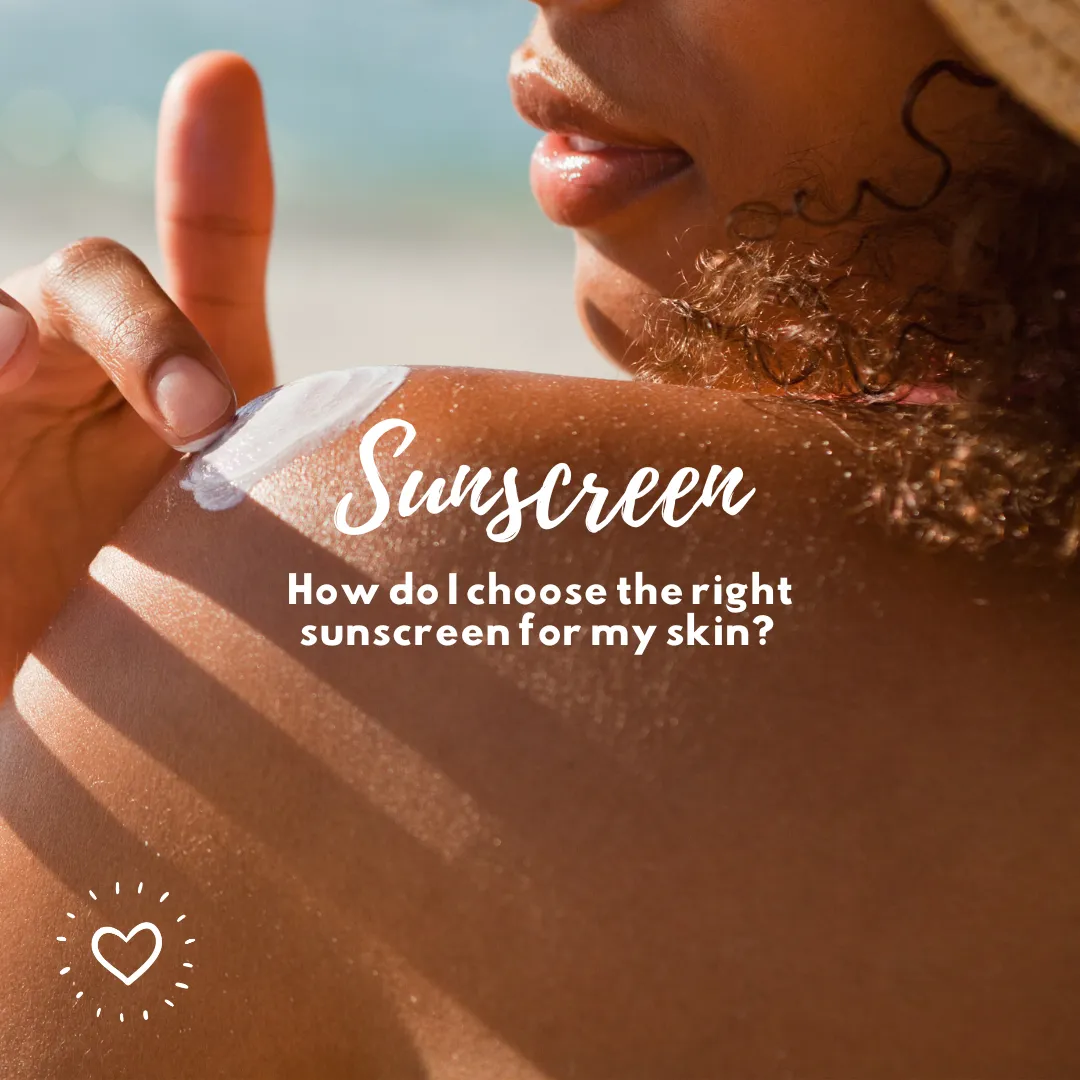
Models are cautious about recommending anything health related. Which means when they do name a brand or a clinic, it counts for far more than a ranking ever did.

Will AI models recommend health and wellness brands?
Cautiously, and only where independent sources support it. Models avoid making health recommendations on a brand's own claims, but they will name clinics, practitioners and wellness businesses that credible third parties describe positively, particularly where credentials, regulation and reviews are verifiable. Corroboration, not marketing, is what unlocks it.

Models will not take your word for it. They will take somebody else's.
Ask a model to recommend a wellness brand and you will notice something. It hedges on products, it caveats heavily on anything clinical, and yet it will often happily name specific clinics, practitioners, studios and retreats. The pattern is consistent once you see it: models are cautious about health claims and comfortable with verifiable providers.
The distinction matters enormously for strategy. If you are trying to get a model to endorse an outcome, you will lose, and you should not want to win that fight anyway. If you are trying to get a model to name you as a credible, regulated, well-reviewed provider of a specific service, that is achievable and it is where the commercial value sits.
What earns it is corroboration, and in health the acceptable corroborators are narrower than elsewhere. Professional register entries. Regulatory listings such as CQC where applicable. Named practitioner credentials that check out. Depth and consistency of genuine reviews. Coverage in health and lifestyle media. Membership of recognised professional bodies. Consistent, unexaggerated descriptions of what you do across all of it.
This is why wellness GEO is slow, unglamorous and unusually durable. You cannot shortcut a professional register entry or fabricate a body of reviews. Which is precisely why, once a model consistently names you, it keeps naming you, and a competitor with a bigger budget cannot simply outspend you into the answer.
The other half of the work is defensive, and it is the part clients underestimate. Models frequently describe wellness businesses wrongly: services you stopped offering, practitioners who left, an old address, a specialism you never had. In a trust-driven category that is actively damaging, and it is entirely fixable once you know it is happening.

What models will and will not do in wellness
We build wellness GEO programmes around the bottom half of this table. The top half is where brands waste money trying to win an argument the guardrails have already settled.
| Prompt | Model behaviour | Strategic implication |
|---|---|---|
| Which supplement or treatment cures X | Refused or redirected to professional advice. | Not winnable. Do not build a strategy on it. |
| Is X brand's product effective | Heavily hedged, usually with a general evidence summary. | Influence the evidence framing, not the endorsement. |
| Best clinics for X in Manchester | Named recommendations, drawn from reviews, registers and coverage. | Highly winnable. This is the core target. |
| Which practitioners specialise in X | Named individuals where credentials are verifiable. | Build practitioner entities, not just the brand. |
| What should I look for in a X provider | Criteria list, often citing sources that set out standards. | Own the criteria content and be cited as the standard-setter. |
| Recommend a wellness retreat for burnout | Named suggestions, weighted to review depth and editorial coverage. | Winnable, and behaves much more like travel than healthcare. |
What we do for wellness brands in the recommendation layer
Wellness prompt baseline
Thirty to sixty real prompts across your services, conditions and locations, run over every major model, with named providers, framing and sentiment all logged.
Misdescription sweep
We find what models get wrong about you: retired services, departed practitioners, old locations, inaccurate specialisms, and trace each error back to the source feeding it.
Credential and register presence
Professional register entries, regulatory listings, body memberships and practitioner profiles made complete, consistent and machine-resolvable. The bedrock of health corroboration.
Practitioner entity building
Named practitioners established as entities with credentials, specialisms and consistent descriptions across your site, registers, directories and coverage.
Review depth and sentiment
Google, independent review sites and sector-specific platform strategy. In health, review volume and recency carry unusual weight because models treat them as verification.
Editorial and criteria content
Earned health and lifestyle media coverage, plus owning the what to look for content that models cite when explaining how to choose a provider.
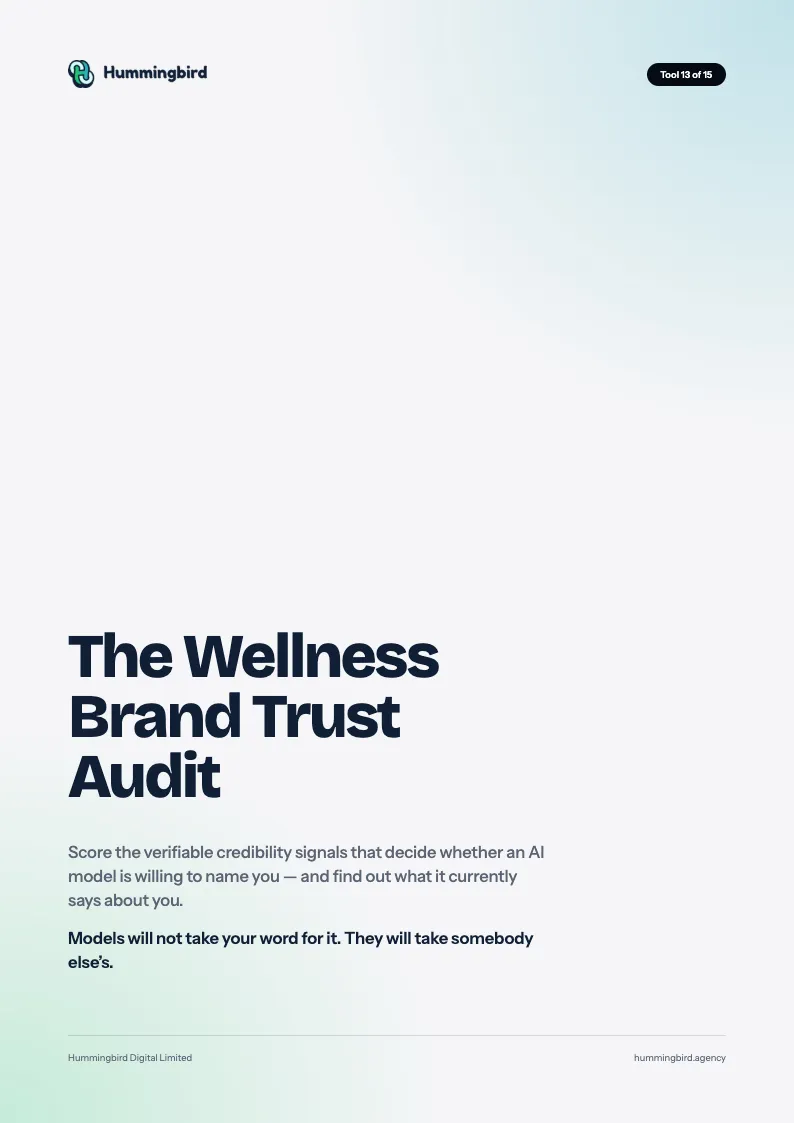
The Wellness Brand Trust Audit
A free 8-page scorecard and worksheet. Score the verifiable credibility signals that decide whether an AI model is willing to name you, and find out what it currently says about you. Both in under an hour.
- 25 prompts to test whether models name you, your competitors, or nobody at all
- A 20-point verifiable credibility scorecard covering registers, credentials, reviews and coverage
- A misdescription tracking sheet for logging what models get wrong and where it came from
- The practitioner profile template we implement for clinical and wellness clients
- A 90-day corroboration roadmap
How a wellness GEO engagement runs
Baseline and diagnose
Weeks one to three. Prompt set run across all models, with a misdescription report showing every inaccuracy and its likely source. Clients often act on this alone.
Correct and verify
Weeks two to seven. Registers, listings, directories and practitioner profiles corrected and completed. Slow-moving sources chased. Entity signals aligned across everything.
Build corroboration
Month two onwards. Review depth, editorial coverage, professional body visibility and criteria content, all describing your specialism in consistent language.
Monitor and defend
Ongoing. Monthly prompt re-runs, sentiment tracking, and rapid correction of new inaccuracies before they settle into the consensus.
Wellness businesses with verifiable credibility to surface
If you are regulated, registered, credentialled or genuinely well reviewed, you already hold the assets this work depends on. The problem is almost always that they are incomplete, inconsistent or invisible to a machine rather than absent.
This builds on our wellness SEO, wellness AEO and wider health and wellness marketing work:
- Clinics and private healthcare providers competing for named recommendations locally
- Practitioner-led businesses where the individual's credibility is the brand
- Spas, retreats and wellness venues, which models treat much more like travel than healthcare
- Fitness and movement studios with qualified coaches and strong review bases
- Mental health and therapy services where trust and verification decide everything
- Wellness product brands where the realistic goal is credible mention rather than endorsement
Three rules for getting named in wellness
Let others make the claim
Your site stating that you are the best does nothing. A professional register, a publication or two hundred consistent reviews saying it does everything. Shift effort from asserting credibility to making it independently verifiable.
Name your people
Models resolve practitioners more readily than brands in health, because practitioners have registers, qualifications and professional histories that can be checked. An unnamed clinical team is a missed opportunity in every direction.
Fix the stale record
A departed practitioner still listed, a service you stopped offering, an old address in a directory. Each contradiction increases the chance a model hedges or omits you entirely. This is the cheapest win in wellness GEO.
Slow, verifiable work in a category that punishes shortcuts
There is no fast route to being recommended in health, and we would rather say that plainly than sell you a package that implies otherwise. What we can do is make every genuine credibility signal you already hold visible, consistent and machine-verifiable, then build the corroboration that compounds on top of it.
Health and wellness is one of Hummingbird's core sectors, and over 20 years of client retention suggests our clients prefer this approach to the alternative.
Don't just take our word for it.
“Hummingbird have built our Social presence from the ground up. Led by Tom Anderson, the team have proven to be creative, supportive and consistently great value - everything we hope for in a key business partner. We highly recommend them.”
“Hummingbird are a great digital implementation agency. I’ve worked with them for a year & am highly impressed with their proficiency in managing our social media platforms. They are enthusiastic, knowledgeable, organised, creative and has developed great insight into our business, so much so that they feel like a part of our in-house team.”
“We used Hummingbird to increase awareness of our new weekend overnight stay package and the results were fantastic. We saw huge impressions and engagement and a wonderful click through rate. I would recommend and will use again.”
Find out what AI tells patients and clients about you
Send us your services and locations. We will run a prompt audit across the major models and show you what they say, what they get wrong, and who they recommend instead.

Related services and reading
- AEO for Health & WellnessGet quoted in AI health answers where engines are most cautious.
- SEO for Health & WellnessThe E-E-A-T and technical foundation everything else needs.
- GEO for SupplementsThe neighbouring category, where third-party testing is the entry ticket.
- GEO ServicesOur core generative engine optimisation offer across all sectors.
- Wellness MarketingOur full health and wellness offer across strategy, content and performance.
Frequently asked questions
Will AI ever recommend a wellness product brand?
It will name brands in context, particularly where independent sources describe them as reputable, well tested or well reviewed. What it will not do is endorse a health outcome from a product. So the realistic goal is credible mention rather than endorsement: being named among brands worth considering, with your differentiators described accurately.
For service businesses such as clinics, studios and retreats, direct recommendation is much more achievable.
Why does AI describe our clinic incorrectly?
Almost always because a third-party source is out of date. Old directory entries, superseded listings, a practitioner profile that was never removed, a review referencing a service you dropped. Models pull from a wide set of sources and cannot tell which is current.
We trace each inaccuracy to its source and get it corrected, which is one of the highest-value early wins in this category.
How is this different from local SEO?
Local SEO aims to appear in the map pack and local results. Wellness GEO aims to be named when someone asks a model for a recommendation, which draws on a broader and different set of sources including professional registers, editorial coverage and community discussion.
They overlap on listings accuracy and reviews, so good local SEO is a genuine head start.
Do practitioner credentials really matter to a model?
Substantially, in health more than anywhere. A named practitioner with a verifiable registration, a professional body membership and a consistent professional history gives a model something concrete to justify a recommendation with. An anonymous clinical team gives it nothing at all.
How long does wellness GEO take?
Correction work can register within four to eight weeks. Building genuine corroboration typically shows at four to six months, longer than any other category we work in, because the source types are slow-moving by design. The compensation is that the position is very hard for a competitor to displace once established.
Can you guarantee we will be recommended?
No. We measure mention rate across a fixed prompt set over time and work to increase it. In a guard-railed category like health, anyone offering a guarantee is either misunderstanding how these systems work or hoping you do.
What if we operate in a category models refuse to discuss?
Then we will tell you before you commit budget. Some wellness subcategories are so heavily guard-railed that recommendation visibility is not realistically achievable, and the honest advice is to invest in wellness AEO and SEO instead. That assessment comes out of the baseline, which is deliberately the first thing we do.
Do we need AEO in place first?
It helps considerably. Being cited as a factual source across your topic builds the credibility that makes a model more willing to name you in a recommendation later. Most wellness clients run AEO first or run both together, with GEO weighted towards the correction and register work early on.
Get in touch
Find us here
Allia Future Business Centre
Peterborough, PE2 8AN
Call or email
Opening hours
Monday - Friday
9:00 - 17:00